Historic Rescue Missions Where the Right Equipment Made All the Difference
Rescue operations at water have been carried out for thousands of years, but it is only in the past few centuries that technology has begun to play a truly decisive role. Throughout history, there are countless examples where the right equipment—sometimes in its simplest form, sometimes as advanced technology—has meant the difference between life and death. Here, we highlight several historical events that show why modern safety equipment, like the solutions we develop at Shore Safety AB, remains just as vital today.
1. The Importance of Early Life Buoys – Shipwrecks in the 1800s
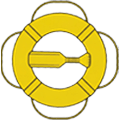
During the 1800s, numerous shipwrecks occurred along Europe’s coastlines. At this time, cork life buoys began to be standard equipment on larger vessels.
In several documented rescues, including incidents after storms in the North Sea, crew members and passengers were able to stay afloat for hours—thanks to these early life buoys. They were simple but revolutionary: a floating device that could be quickly thrown out to keep a person above water until help arrived.
Why it matters today:
It shows that visible and easily accessible life-saving equipment at the waterfront has always been one of the most crucial factors for survival—a principle that Shore Safety builds its products on.
2. RMS Titanic – The Case That Changed Everything
When the Titanic sank in 1912, 706 people survived, many thanks to the lifeboats that were available. But the insufficient number of lifeboats became a critical factor that reshaped maritime safety worldwide.
After the disaster, new requirements were introduced:
- more lifeboats
- improved life jackets
- international standards for sea rescue
What we learned:
The right equipment saves lives—but only if it is available, complete, and present in sufficient quantity.
3. The Breeches Buoy – The Lifeline System That Saved Hundreds
Throughout the 1800s and 1900s, an early line-based rescue system called the breeches buoy was used along the coasts of the USA and Europe. It functioned as a combination of a life buoy and a rescue line, allowing a person to be transported between a stranded vessel and shore using a harness-like seat.
Thanks to this system, hundreds of people were saved in areas where boats could not approach cliffs or wrecks.
Key takeaway:
Quick-deploying rescue equipment with a line is extremely effective—a concept found today in modern throw lines and rescue stations from Shore Safety AB.
4. Life Rafts and Modern Life Jackets During World War II
During World War II, thousands of emergency landings and ship accidents occurred. The introduction of more advanced life jackets and life rafts saved countless lives. In many cases, survivors drifted for hours or even days with the help of:
- self-inflating rafts
- signaling devices
- emergency flares
- water and ration packs
This period marked one of the greatest leaps in water safety technology.
Modern connection:
Today’s rescue stations are built on the same principles—robust equipment that is ready for immediate use.
5. The Rescue of the Thai Cave Boys in 2018
One of the most dramatic modern rescue operations was the rescue of 12 boys and their coach from the Tham Luang cave in Thailand. Special equipment played a critical role, including:
- advanced diving suits
- communication systems
- oxygen equipment
- specially designed masks for children
It was the combination of expertise and equipment that made the operation possible.
Key takeaway:
Even in less extreme environments—lakes, marinas, public beaches—the right equipment enables successful rescues, even by individuals without specialized training.
6. Modern Incidents in Small Harbors – The Life Buoy Continues to Save Lives
Every year in Sweden, people are rescued after falling from docks or boats, thanks to bystanders using:
- life buoys
- throw lines
- rescue stations
Police reports show that quick access to rescue equipment is the single most important factor in surviving drowning incidents in harbors.
How Shore Safety AB works with this:
By developing smart rescue stations, clear throw lines, and durable buoy systems, Shore Safety AB ensures that life-saving equipment performs just as reliably today as in the best historical examples.
Conclusion: History Repeats the Same Lesson Again and Again
Whether it involves:
- 19th-century cork life buoys
- the Titanic and the shortage of lifeboats
- coastal line-based rescue systems
- modern rescue gear in caves and mountains
- everyday incidents at marinas and beaches
…the message is clear:
The right equipment, at the right time, in the right place, saves lives.
This is the same insight that drives the development at Shore Safety AB, where we provide municipalities, harbors, and companies with modern and reliable solutions to prevent drowning accidents.
Contact Shore Safety AB for advice or product information.