
The Most Dangerous Places Near Water – and How to Make Them Safer When we...


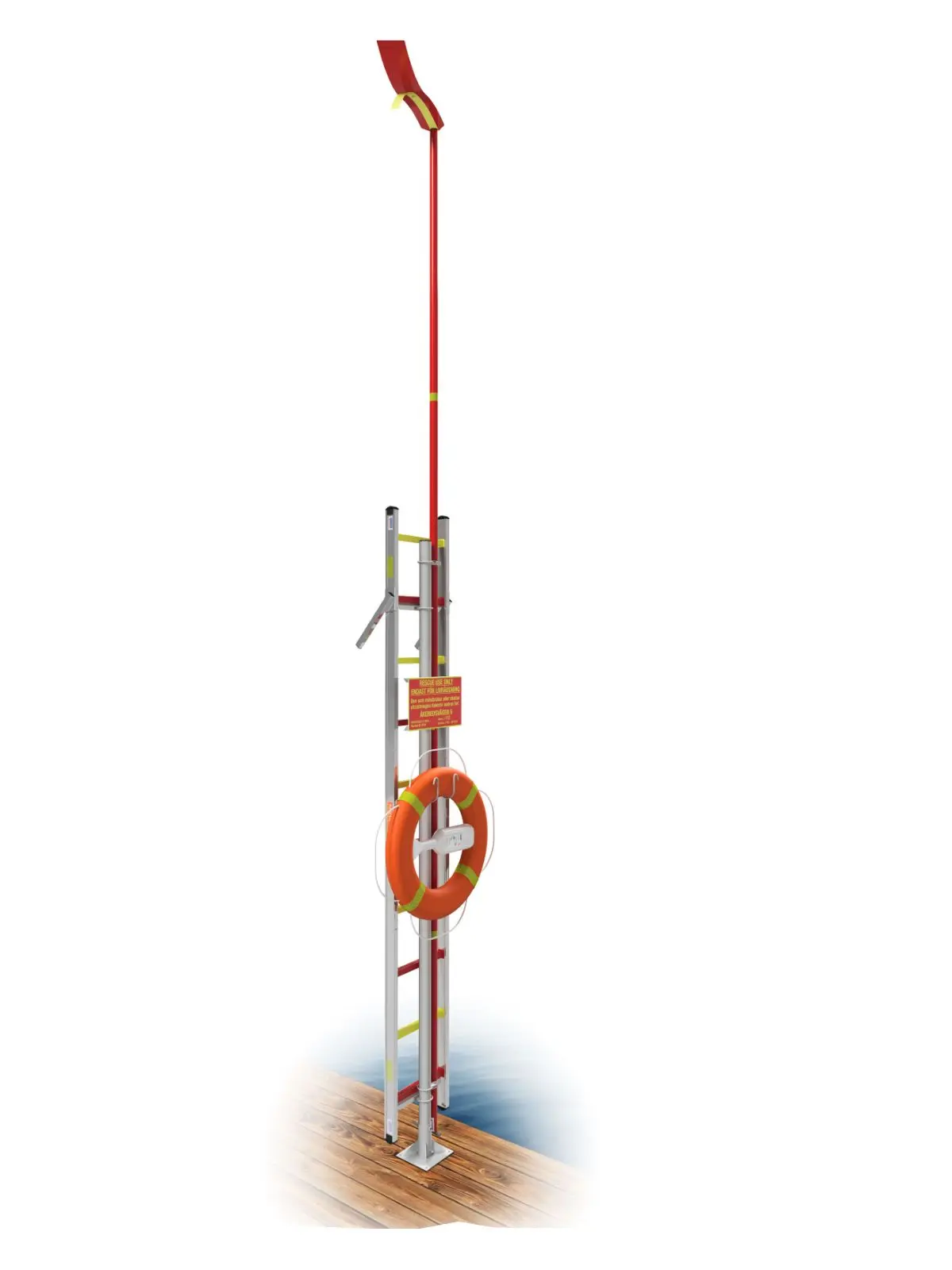
The Rescue Station – Quay is a complete lifesaving station designed for quay environments where fast access, clear visibility and safe recovery from the water are essential.
Built for long-term use in exposed marine environments, the station supports structured safety planning and reliable emergency response over time.
The Rescue Station – Quay is a complete rescue installation that brings essential lifesaving equipment together in one clearly defined safety point. It is intended for quays, ports, harbours and industrial waterfronts where rescue equipment must be easy to identify and quick to use.
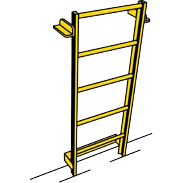
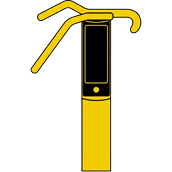
The system combines a 3 metre post, a type-approved 4 metre rescue ladder, a 5 metre rescue hook, a lifebuoy and a location sign in one organised setup. By collecting the core rescue components in a single installation, the station improves response readiness and reduces the risk of missing or poorly positioned equipment.
Compared with separate rescue products installed individually, a complete station provides clearer organisation, better visibility and more consistent access. It is especially suitable for high quay edges where safe recovery from the water is difficult and where a longer rescue ladder is required.
The solution supports waterfront safety planning and aligns with the legacy legal guidance referenced for quay rescue equipment, including the need for lifebuoys, fixed quay ladders or stairs, and additional rescue equipment where quay edges are high or difficult to access.
| Post height | 3 m (Hook 5m) |
|---|---|
| Rescue ladder length | 4 m |
| Rescue ladder approval | AFS 2004:3 and EN 131 |
| Included equipment | Post with fittings, type-approved rescue ladder, rescue hook, lifebuoy, reflective location sign |
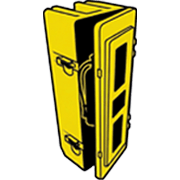
| Optional equipment | Fire cabinet |
| Primary use environment | Quays, ports, harbours, industrial docks, public waterfronts |
| Mounting options | Shore Safety quay bracket or concrete foundation |
| Material, post | Marine-grade aluminium |
| Material, fittings | Stainless steel and galvanised steel |
| Visibility feature | Reflective location sign |
| Compliance note | Shore Safety rescue products are stated to support MSB requirements |
The station should be installed along the quay where rescue equipment needs to be easy to see and access without obstruction. It should be placed across the waterline so that the installation remains clearly visible from a distance. The rescue ladder is mounted on one side of the post and the lifebuoy on the other, which helps separate functions and improve access during use. The ladder should extend sufficiently into the water for safe recovery in high quay environments. The station can be anchored to concrete or timber quays using Shore Safety’s quay bracket or installed with a concrete foundation, depending on site conditions.

The 4 metre rescue ladder is designed for high quay environments and reaches down into the water where recovery is otherwise difficult. Its approval supports use in professional safety installations.

All essential rescue equipment is gathered in one clearly visible location. This makes the station easier to identify, easier to maintain and faster to use during an emergency.

The station is designed to be placed visibly along the quay, with a reflective location sign that helps users find rescue equipment in changing light and weather conditions.

The ladder is mounted on one side of the post and the lifebuoy on the other. This improves access to the correct equipment depending on approach direction and rescue situation.
This station includes essential rescue equipment for quay, port and waterfront environments, giving users a clearly organised emergency point with the components needed for fast rescue response.
All included components are selected to function together as one complete quay rescue system with clear positioning, visibility and immediate accessibility.
Component | Function | Typical placement |
Post pole | Carries and organises rescue equipment | Central station structure |
Type-approved rescue ladder | Supports recovery from the water | Mounted on one side of post |
Lifebuoy | Immediate flotation support | Mounted on opposite side |
Rescue hook | Assists reach and contact from quay edge | Mounted on post |
Reflective location sign | Improves visibility and identification | Mounted high on station |
The station can be configured to match different quay layouts, safety plans and site-specific requirements.

Built for real conditions, not just specifications.
With decades of experience in waterside safety, our equipment is designed, tested, and manufactured in Sweden to perform where it matters most. Every product meets strict MSB requirements and is made to deliver reliable, long-term safety in demanding environments.
Designed to last — and backed accordingly.
Our lifesaving equipment is engineered for durability, dependable performance, and minimal maintenance throughout its lifecycle. Tested under Nordic conditions, each product is built for long service life and consistent function, so you can trust it to be ready when needed.
From our facility to yours — safely and efficiently.
All equipment is shipped directly from Sweden through trusted logistics partners. This ensures reliable delivery, consistent quality control, and predictable lead times, so products arrive secure, on time, and ready for installation.
Find answers to common questions about equipment, installation, compliance and use in quay environments.
The station typically includes a 3 metre post with fittings, a type-approved 4 metre rescue ladder, a rescue hook, a lifebuoy and a reflective location sign. A fire cabinet can also be added as an option.
A type-approved ladder provides a verified rescue solution for high quay environments where it can be difficult to get out of the water. It also supports safer planning for professional and public waterfront sites.
It is designed for quays, ports, harbours, industrial docks and other waterfront locations where rescue equipment needs to be organised, visible and ready for immediate use.
The station should be placed across the waterline in a clearly visible location. The goal is to make the rescue equipment easy to identify from a distance and easy to access during an emergency.
It can be anchored to concrete and timber quays using a Shore Safety quay bracket or installed with a concrete foundation, depending on the structure and installation conditions.
Yes. The station can be configured with optional components such as a fire cabinet and can be adapted to suit local safety planning and project requirements.
A complete station improves organisation, visibility and accessibility by grouping critical equipment in one location. This makes inspection, maintenance and emergency response more consistent.