
The Most Dangerous Places Near Water – and How to Make Them Safer When we...


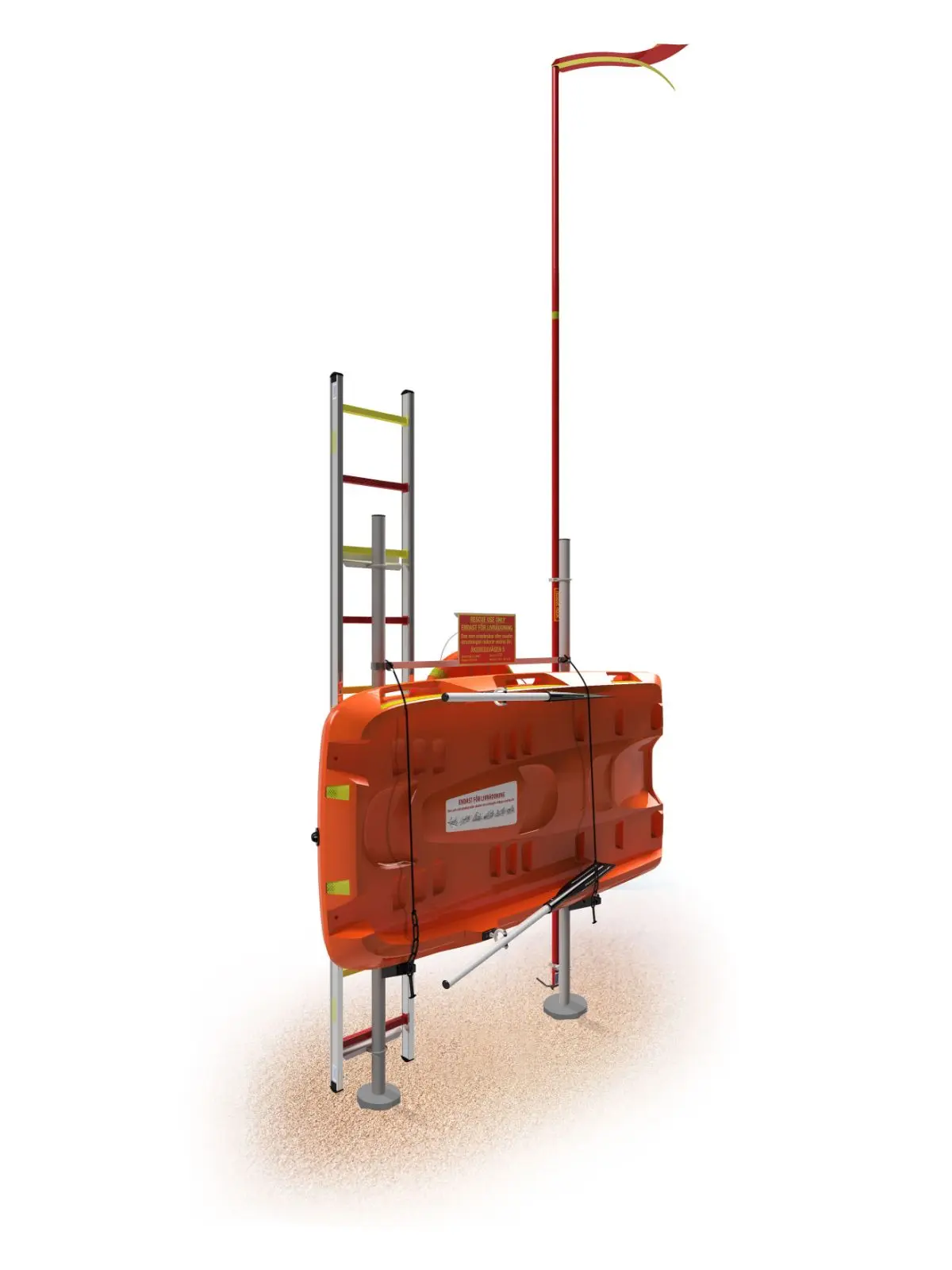
The Rescue Raft Station is a complete rescue installation designed for quay, harbour and waterfront environments where fast access to organised lifesaving equipment is essential.
Built for demanding marine and Nordic conditions, the station helps create a reliable rescue point that supports both daily safety planning and emergency preparedness.
The Rescue Raft Station is a complete safety system that gathers essential rescue equipment in one clearly defined location along the quay. It is designed for environments where a person in the water may need flotation support, reach assistance and a safe way back up from the waterline.
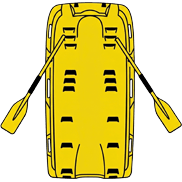
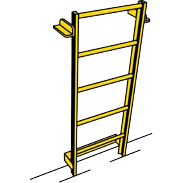
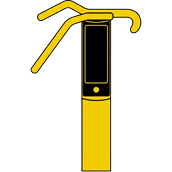
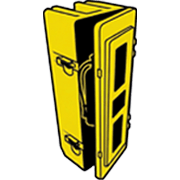
By combining a rescue raft, a type-approved rescue ladder, a lifebuoy, a rescue hook and clear location marking, the station improves readiness and simplifies emergency response. The layout makes it easier to identify the equipment quickly and use the right component for the situation.
Compared with separate rescue products placed individually across a site, a complete station creates better visibility, clearer organisation and a more structured rescue point. This is especially valuable on quays, harbours and industrial waterfronts where height differences, deep water and exposed conditions increase the need for coordinated lifesaving equipment.
| Station type | Complete rescue raft station for quay environments |
|---|---|
| Application environment | Quays, harbours, industrial waterfronts and exposed marine edges |
| Included main components | Two-legged stand with fittings, rescue raft, rescue ladder, lifebuoy, rescue hook and location sign |
| Ladder length | 4 m |
| Ladder compliance | Type-approved by SP/RISE for rescue use according to AFS 2004:3 and EN 131 |
| Ladder material | Marine-grade aluminium with galvanized and stainless-steel fittings |
| Raft material | Polyethylene |
| Visibility features | Reflective location sign and high-visibility rescue ladder markings |
| Mounting principle | Anchored to concrete or wooden quay using quay brackets or concrete foundation |
| Outdoor suitability | Designed for harsh coastal and Nordic conditions, including salt, wind, UV and cold exposure |
The station should be installed perpendicular to the waterline in a clearly visible position with unobstructed access from the quay. It should be placed where rescue equipment can be identified quickly from a distance and reached without crossing obstacles or restricted operational zones.
The raft is mounted securely on its brackets, while the ladder, lifebuoy and rescue hook should be arranged for fast access from either side of the station. The installation is normally anchored to concrete or wooden quay structures using Shore Safety quay brackets or a suitable foundation solution. Placement should support safe use at higher quay edges where direct rescue from land may be difficult.

All key rescue components are gathered in one defined station, making the installation easier to identify, plan and use in an emergency.

The included 4 m rescue ladder is designed for higher quay edges and supports safer access down to and up from the water.

The rescue raft adds a floating rescue platform for situations where a person cannot be reached effectively from land alone.

Each component has a dedicated place in the station, helping users locate the right equipment quickly when time matters.
This station includes essential rescue equipment selected for quay, harbour and waterfront environments where users may need flotation support, reach assistance and a controlled way back up from the water. The section should help both users and search engines understand that this is a complete rescue system rather than a single product.
All included components are chosen to work together as an integrated rescue system adapted for quay installations and other high-risk waterfront environments.
Component | Function | Typical placement |
Two-legged stand | Carries and structures the station | Main central frame |
Rescue raft | Floating rescue support | Mounted on dedicated brackets |
Rescue ladder | Water access and assisted recovery | Side-mounted on station |
Lifebuoy | Immediate flotation support | Easily reachable external position |
Rescue hook | Reach and assistance from quay edge | External mounting |
Location sign | Improves identification and visibility | Visible top position |
The station can be configured to match different quay conditions, project requirements and site-specific safety planning.

Built for real conditions, not just specifications.
With decades of experience in waterside safety, our equipment is designed, tested, and manufactured in Sweden to perform where it matters most. Every product meets strict MSB requirements and is made to deliver reliable, long-term safety in demanding environments.
Designed to last — and backed accordingly.
Our lifesaving equipment is engineered for durability, dependable performance, and minimal maintenance throughout its lifecycle. Tested under Nordic conditions, each product is built for long service life and consistent function, so you can trust it to be ready when needed.
From our facility to yours — safely and efficiently.
All equipment is shipped directly from Sweden through trusted logistics partners. This ensures reliable delivery, consistent quality control, and predictable lead times, so products arrive secure, on time, and ready for installation.
Find answers to common questions regarding configuration, installation, included rescue equipment and suitability for quay environments.
The station normally includes a two-legged stand, rescue raft, type-approved rescue ladder, lifebuoy, rescue hook and a visible location sign. The exact setup can be adapted depending on the project and installation environment.
A rescue raft provides floating support when a person in the water cannot be reached effectively from land alone. It helps create a more complete rescue point for quay environments with deeper water or greater distance from shore.
Yes. The included 4 m ladder is type-approved by SP/RISE and stated to meet AFS 2004:3 and EN 131. This makes it suitable for quay environments where a certified rescue ladder is required.
It should be installed along quays, harbours and similar waterfront edges where users need clearly organised rescue equipment and where height or water depth makes direct recovery more difficult.
Yes. The station is designed for long-term outdoor use in exposed Nordic and marine conditions. Materials and construction are selected to withstand salt, wind, moisture, UV exposure and cold weather.
Yes. Optional lockable raft brackets and project-specific configuration can be used where the installation needs more control, protection or restricted handling.
The station is typically anchored to concrete or wooden quay structures using Shore Safety quay brackets or a suitable foundation solution chosen for the site.